Table of Contents
Toggle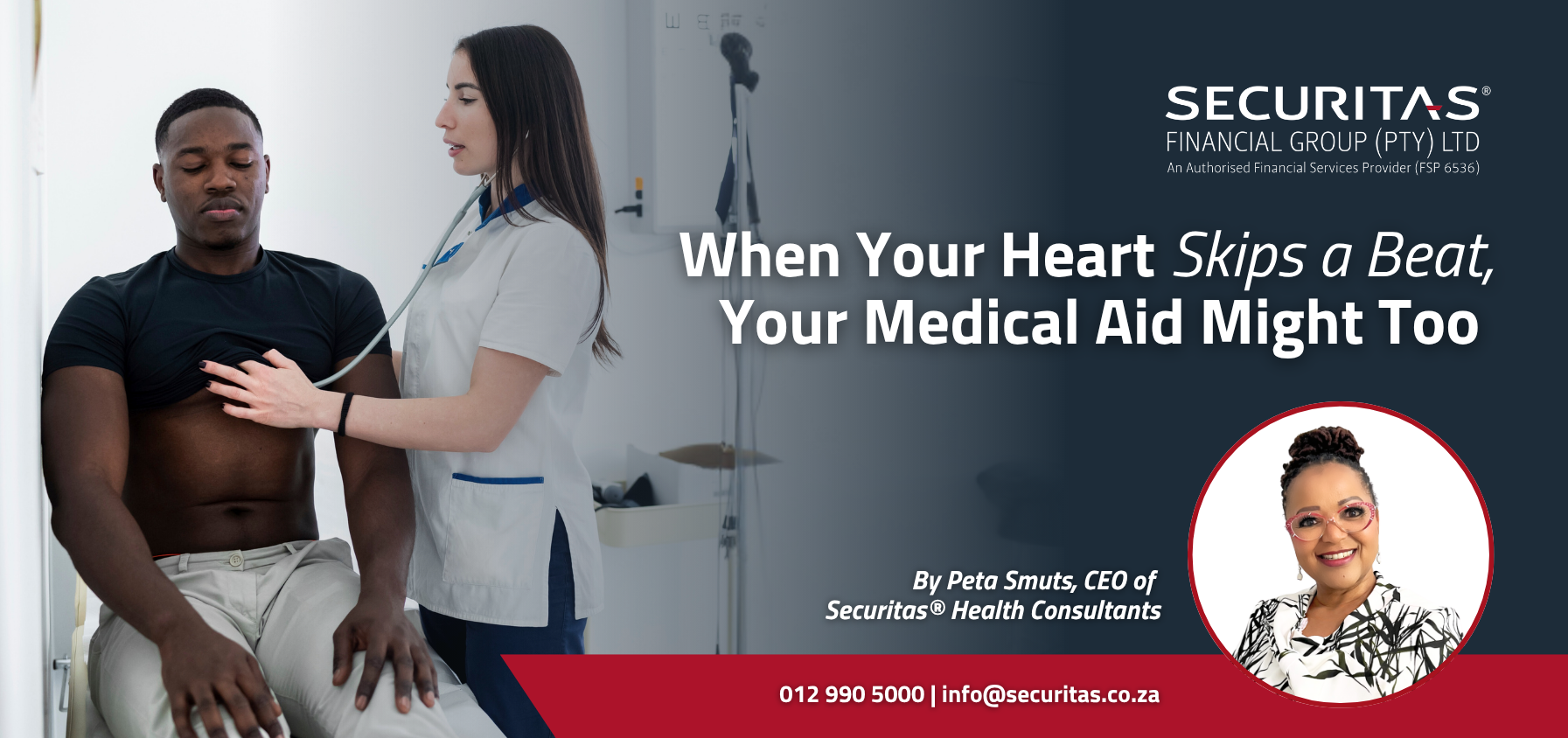
Your Heart
When Your Heart Skips a Beat, Your Medical Aid Might Too
This article is intended for general information only and does not replace professional medical advice. If you have concerns about your heart health, please consult a qualified healthcare professional.
Each year during the first week of June, the world observes World Heart Rhythm Week, a global initiative dedicated to raising awareness about arrhythmias, the often silent and frequently misunderstood disorders of the heart’s electrical system. This year’s theme, “One Heart, Many Rhythms: Awareness, Action, Advocacy”, is a reminder that heart rhythm conditions do not discriminate, and that understanding them could quite literally save your life.
In South Africa, the stakes are high. According to the Heart and Stroke Foundation South Africa, cardiovascular disease is responsible for nearly 1 in 6 deaths in this country, with five South Africans experiencing a heart attack every single hour. More South Africans die of cardiovascular disease than of all cancers combined. These are not just statistics. They are mothers, fathers, colleagues and friends, many of whom had no idea their heart was under strain until a crisis arrived without warning.
What people talk about far less is what that crisis costs.

Securitas® Financial Group
The real price of a cardiac event
A heart attack, arrhythmia, or other cardiac emergency in a South African private hospital is an expensive event. Between specialist cardiologist fees, ICU admission, cardiac monitoring, medication, imaging, and possible surgical intervention, costs can escalate quickly and significantly. The challenge is that medical aid, even good medical aid, does not always cover all of it.
Medical schemes in South Africa reimburse at what is known as the scheme rate, typically 100% to 200% of a benchmark tariff. The problem is that specialists, surgeons, and anaesthetists often charge well above that benchmark. In a planned procedure like a tonsillectomy or appendectomy, an unexpected shortfall is stressful. In a cardiac emergency, when you have no time to negotiate, shop around, or compare providers, that shortfall can be devastating. The reality is that specialists, surgeons, and anaesthetists frequently charge well above what medical aids are willing to reimburse, and many members only discover this after the procedure, when the invoice arrives.
Medical Aid
What your medical aid is likely to cover
Most medical aid plans in South Africa do cover cardiac events as acute in-hospital emergencies, which means your hospitalisation, theatre costs, and prescribed medication will generally be covered, subject to your plan’s rules. Cardiovascular conditions such as hypertension, ischaemic heart disease, and heart failure are also classified as Prescribed Minimum Benefit (PMB) conditions under the Medical Schemes Act, which means medical aids are legally required to cover the diagnosis, treatment, and ongoing care of these conditions at cost, regardless of your available benefits.
That sounds reassuring, and it is, up to a point.
PMB cover applies to specific conditions and defined treatment protocols. Costs that fall outside those definitions, or procedures that exceed what the scheme rate allows, can still leave you with a meaningful out-of-pocket bill. Cardiac rehabilitation, certain specialist follow-up consultations, and some diagnostic procedures may be limited or excluded depending on your plan. And if you are on a hospital plan rather than a comprehensive option, your day-to-day benefits for monitoring and chronic medication management may be limited even after the acute event has passed.

Securitas® Financial Group
The gap that gap cover closes
This is precisely where gap cover earns its place. Gap cover is not a medical aid. It is a short-term insurance product that works alongside your medical aid, covering the shortfall between what your scheme pays and what your provider charges, specifically for in-hospital procedures. In a cardiac context, that can mean covering the difference on a cardiologist’s in-hospital consultation, a surgical procedure, or ICU-related specialist fees that your medical scheme reimburses at scheme rate while your providers charge considerably more.
It can also cover co-payments, which are fixed amounts your medical aid requires you to pay yourself for certain procedures or hospital admissions, regardless of how the rest of the bill is handled. Many people are caught off guard by co-payments during a cardiac admission, not because they were not warned, but because the urgency of the situation meant there was simply no time to plan.
Gap cover is typically affordable, and for anyone with a private medical aid in South Africa, it is worth understanding what your plan does and does not include before you need it.
World Heart Rhythm Week
Knowing your rhythm
One of the important messages of World Heart Rhythm Week is that arrhythmias are often asymptomatic. Atrial fibrillation, the most common arrhythmia, affects roughly 60 million people worldwide and increases stroke risk by five times. Many people carry an irregular heartbeat for months or years without realising it. Regular health checks, including blood pressure monitoring and, where appropriate, an ECG, give your doctor the best chance of catching a problem before it becomes an emergency.
If you have a family history of heart disease, have been told you have hypertension, or have experienced unexplained palpitations, fatigue or breathlessness, it is worth having a conversation with your GP sooner rather than later. As we touched on in Understanding Obesity in South Africa and Why Support Matters, cardiovascular risk does not exist in isolation. Obesity, diabetes, physical inactivity, and high blood pressure are all interconnected risk factors that compound over time.


Securitas® Financial Group
Protecting your health and your finances
The best time to review your medical aid cover and consider whether gap cover is right for you is not after a cardiac event. It is now, when you have the time and clarity to make a considered decision.
Understanding what your plan covers, where the gaps are, and how to close them is one of the most practical things you can do for your health and your financial security. Speak to a qualified financial advisor who understands both medical aid and gap cover options so that if your heart does skip a beat, your cover does not.
At Securitas® Financial Group, we believe that protecting your health and protecting your future go hand in hand. World Heart Rhythm Week is a good reminder that both are worth taking seriously.
Did you find this article insightful? You may want to read Understanding Obesity in South Africa and Why Support Matters and Why Following Your Gut Might Be the Answer to Good Health as well.